
Free download
Roof Maintenance & Storm Documentation Checklist
One page covering the two things that matter most for a roof in Issaquah and Eastside King County: a seasonal moss/gutter maintenance schedule for a climate that sees 60–65 inches of rain a year, and exactly what to do — and photograph — if a windstorm damages your roof. No email required. Print it, save it as a PDF, or just read it here.
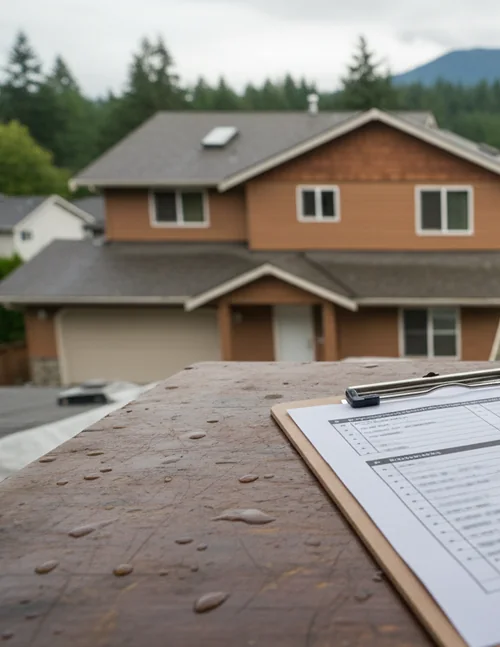
Seasonal Moss & Gutter Checklist
Recommended twice a year — spring and fall — since near-daily winter moisture is what drives roof problems in this climate, not extreme cold. Issaquah runs 60–65 inches of rain a year, more than Seattle or the flatter Eastside, and tree-shaded lots near Cougar, Squak, and Tiger Mountain grow moss faster still.
- Walk the property and visually check every roof slope for moss or algae coverage, especially shaded and north-facing sections.
- Look for shingle tabs or shakes that appear lifted, cupped, or dark/spongy — a sign moss has already gotten underneath the material.
- Clear gutters and downspouts of moss debris and leaves so water actually drains.
- Check the attic (if safely accessible) for any new water stains, musty smell, or daylight through the deck.
- If it's been more than a year since the roof was last treated for moss, schedule a treatment before the next wet season.
- After any major windstorm, do a quick visual check for missing or displaced material even if nothing looks wrong from inside.
- If your home sits in wildland-urban-interface terrain near the Issaquah Alps, confirm your roof assembly still meets Washington's Class A fire-rating requirement — this matters most at reroof time, not year to year.
After a Storm: Documentation Checklist
Good documentation is the biggest factor in how smoothly an insurance claim goes, if one applies. Do these in order:
- Secure the property first. If it's safe, contain any active interior leak and prevent further water intrusion — but don't get on the roof yourself.
- Photograph before any repair. Wide shots for context, close-ups for detail, from multiple angles, the same day if possible.
- Photograph undamaged areas too. This helps establish contrast between the storm damage and the roof's prior condition.
- Note the date and conditions of the storm itself — this supports the "sudden event" documentation insurers look for.
- Call for a professional assessment before assuming the damage is (or isn't) storm-related — moss-driven wear and sudden storm damage look different, and the distinction affects insurance coverage.
- Report to your insurer promptly once you have initial photos and an assessment.
When to Call a Professional Right Away
- Active dripping or a fast-growing ceiling stain
- Visible daylight through the roof deck from inside the attic
- Missing or torn material covering more than a small, isolated area
- Any storm damage you're considering filing an insurance claim for
Questions about anything on this checklist?
Call (425) 642-1901 — a real person answers during business hours.